Live Cricket Score


Popular Series
© 2026 Copyright Lifease Solutions LLP. All rights reserved.
NEWS
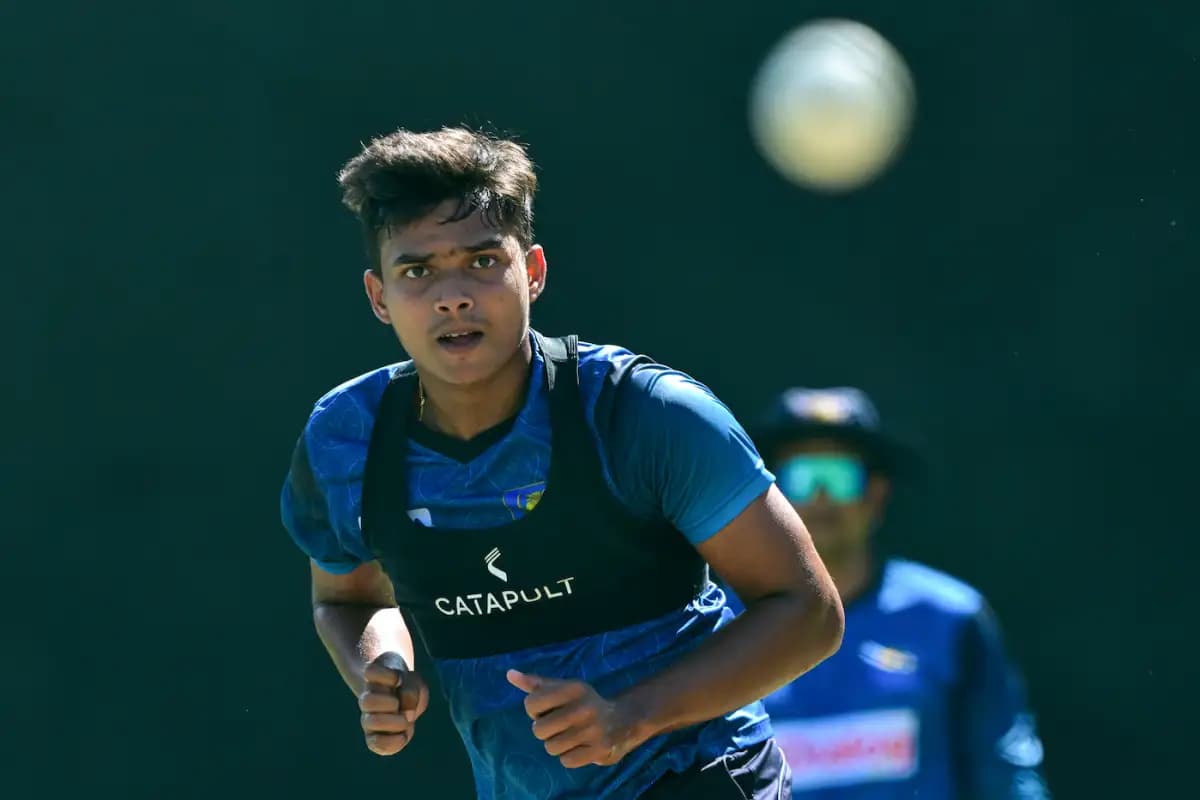
The call came on a humid afternoon, the kind that makes Colombo’s air feel heavy with salt and possibility. Dunith Wellalage listened, nodded, thanked the selector on the other end, and then did what leaders often do in private: he went quiet for a moment. Captaincy. Not just a line on a team list, but a promise—and a reckoning. For Sri Lanka A, the Rising Stars T20 Asia Cup isn’t merely a tournament; it’s a rehearsal for futures not yet written. And at the center of that stage stands a left-arm spinner who learned early how to bend a match to his will.
Wellalage’s story has never been about noise. It’s been about calibration. Even as a teenager he bowled like a locksmith, trying keys at different speeds until a stubborn door finally clicked. Over time, the craft expanded: the arm ball grew stealthier, the seam prouder, the loop more persuasive. Batting, too, shifted from survival to statement—a late punch past point, a pick-up over midwicket, the calm to ignore three dots because the fourth ball would be his. But leadership asks for more than skills. It asks for rhythm you can lend to others.
Sri Lanka A is a mosaic of careers on the verge: quicks who touch the pitch like it’s live wire; batters with backlifts full of ambition; keepers who see the whole field as a sequence waiting to be solved. In the weeks leading into the tournament, their sessions ran long and purposeful. Fielding drills that left knees scuffed and palms reddened. Death-overs simulations where the task wasn’t just to hit yorkers, but to choose them—here, now, after two slower balls. Middle-order batters learned to treat overs like currency, budgeting risks, keeping an eye on the inflation of scoreboard pressure.
In that ecosystem, Wellalage’s voice has started to matter. Captains in T20 cricket are part chess player, part casino dealer, part therapist. They must sequence bowlers to matchups, sell fields that tell lies, and lift shoulders after a dropped chance. A left-arm spinner at the helm brings a specific geometry: ring fields that close like irises, mid-off nudged a step straighter to bait the drive, a leg slip that appears for one ball and vanishes before the batter can blink. He will bowl in the powerplay when the ball is still bright and arrogant, daring right-handers to slog-sweep against the turn; later, he will return at the dead, hiding pace in flight and pulling length just enough to make batters misjudge their reach.
Tactically, the blueprint is simple to say and hard to live: win the first six overs; own the last four. That means a new-ball pair unafraid to push their lengths higher than comfort, hunting nick and pad rather than just the heavy ball. It means spinners who aren’t merely containing but attacking—seeking stumps, pads, and batter ego. The middle overs, where intent often wilts, will be Wellalage’s playground. Change the angle, alter the pace by four kilometers, invite the big shot with a boundary rider who’s three paces deeper than expected. T20 is a game of inches you can’t measure; it’s a game of timing you can feel.
The batting order will carry its own hinges. A top three that can shift between blueprint and improvisation, a middle that treats risk like a dial rather than a switch, and finishers who know that a 15-run over begins with the courage to leave a good ball alone. Sri Lankan cricket, at its best, is a conversation between flair and calculation. In the A setup, that conversation turns practical: two left-handers staggered to break a legspinner’s rhythm; a right-hander promoted if the opposition’s offspinner takes the new ball; a pinch-runner mindset for twos that look like ones. Expect Sri Lanka A to chase space in the outfield as greedily as they chase boundaries.
Leadership also lives between deliveries. That’s where a captain steadies a kid who’s just been lofted over his head, or where he reminds a batter that a dot is sometimes a loan with interest. Wellalage’s demeanor—eyes alert, gestures economical—fits that in-between. He is not a shouter, but his plans have edges. Bowlers know exactly why they’re coming on and exactly what one mistake looks like. When the plan fails, the switch is immediate: change the end, reverse the matchups, slip in a part-timer to reset the batter’s eye-line. T20 forgives nothing but rewards nerve.
Then there’s the intangible business of identity. The Rising Stars platform can turn a good month into a career lane. Opponents will bring variety: openers who sweep from the first ball, wristspinners who hide a googly in their grin, seamers with cutters that behave like treachery at waist height. Wellalage’s task isn’t to out-trick everyone; it’s to make Sri Lanka A look like itself—nimble in the field, opportunistic with the bat, stubborn with the ball. You’ll see it in small rituals: a huddle that doesn’t drag, a quick clap after a near-miss, a bowler allowed one long stare into the distance before the next plan arrives.
In wins, captaincy feels like authorship. In losses, it feels like inventory. Either way, the learning stacks up. When to save overs. When to burn reviews. Whether to accept a 150 game and sculpt it, or chase a 175 game and dare the chase. The best leaders become archivists of moments: that one batter who hates the ball angled across at chest height; that one finisher who freezes if he’s denied a single early. By the end of this tournament, Wellalage’s book will be thicker—and so will the spines of those sharing his dressing room.
There will be a night—there always is—when the dew complicates everything. The ball will come back slick and sullen, and line lengths will blur. That’s when a captain earns his commas. Do you take pace off and drag hitters across the line? Or go full and aim for toes, trusting your fielders to turn grease into sure hands? Wellalage will have to choose in real time, with the scoreboard chewing through the over-rate. The right call won’t guarantee a win; the wrong one won’t guarantee a loss. But clarity invites execution, and execution is the currency this format respects.
For Sri Lanka A, the deeper purpose is pipeline. The badge on the chest is the same, but the room is smaller, the spotlight sharper, the margins thinner. Perform here and the distance to senior colors shrinks from a horizon to a short sprint. As captain, Wellalage isn’t just navigating matches; he’s auditioning pathways for others—nudging a quick to trust his bouncer again, asking a batter to swap glory for graft in the 12th over, reminding everyone that the next level isn’t somewhere far away; it’s one decision better than yesterday.
When the Rising Stars T20 Asia Cup begins, there will be a familiar hush just before the first ball of Sri Lanka A’s campaign. Fielders will shuffle into place, chatter will crackle from point to mid-on, and the bowler will flex fingers around the seam. Somewhere at mid-off or behind the stumps, the captain will set one last angle, tug his cap, and breathe. In that breath lives the future: of a team finding its voice, of a spinner embracing full responsibility, of a cricketing nation forever chasing balance between art and edge.
Dunith Wellalage didn’t ask for a pedestal; he asked for the ball and the chance to shape an innings. Captaincy simply hands him more of both. And if he gets it right—even imperfectly, even messily—Sri Lanka A will leave this tournament with more than results. They’ll leave with a way of playing that feels like them. That’s how a rising star becomes a north star.
Catch the match live updates, highlights, and full match coverage on CricRadio. Get fast, accurate, and ad-free updates throughout the game. Download the CricRadio app from the Play Store to stay connected. You can also get the live scores of cricket series directly on the CricRadio website for real-time coverage.
#Asia Cup Rising Stars
#Dunith Wellalage
#Sri Lanka
#Sri Lanka A