© 2026 Copyright Lifease Solutions LLP. All rights reserved.


Popular Series
NEWS
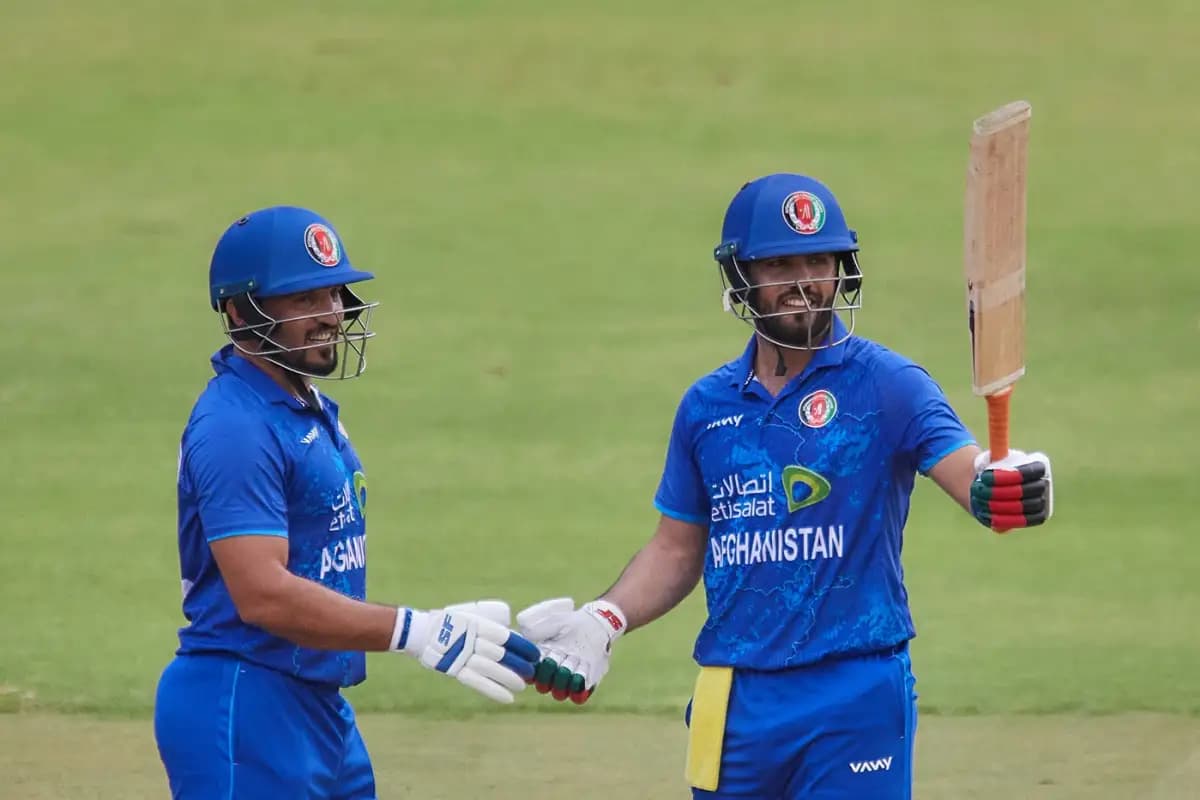
They say some leaders arrive with brass bands and banners. Others just start doing the work so convincingly that, one morning, everyone looks up and realizes they’ve been following him for a while. Rasooli belongs to the second kind. The announcement that he would captain Afghanistan A as defending champions at the Rising Stars Asia Cup felt less like a surprise and more like a line catching up with a truth already written in practice sessions, huddles, and hard overs.
He grew out of dusty nets and long bus rides, into dressing rooms where expectations are packed as tightly as kit bags. The batting has always caught the eye—hands compact, wrists quick, a gut sense for when the field’s tension can be pulled apart. But the quiet evolution sat between deliveries: the look he gave a young quick after a misfire that said, “Again, with purpose,” the field tweak that closed a gap before a batter noticed it existed. Captaincy simply hands a name tag to a job he’d already begun.
Afghanistan A carry the weight of a trophy and the itch of repetition. Winning once is adrenaline; defending is architecture. The first thing Rasooli sets about building is rhythm—of the order, the bowling spells, the fielding unit’s heartbeat. T20 doesn’t forgive drift. So he works in short, sharp circuits: powerplay plans rehearsed until they feel like muscle memory; middle-overs choreography where bowlers hunt in angles rather than in isolation; death-over checklists that strip the panic out of decision-making. Each drill is a bet that pressure favors the prepared.
The squad around him is a lively gallery of possibility. There’s a tearaway who believes in chest-high questions, a crafty seamer whose cutters land like riddles, wristspinners who smuggle deception in the pause between palm and seam, batters with backlifts sketched for both mayhem and method. Afghanistan’s cricket has long balanced raw heat with shrewdness—desert fire meeting chessboard calm. In the “A” setup, that balance turns clinical. If the opposition opens with an offspinner, a left-hander moves up. If the legspinner grips it long, a right-hander slides in to jam the length. Not everything is improvisation; much of it is pre-composed jazz.
Rasooli’s batting will anchor the tone. He doesn’t treat dot balls like doom, or boundaries like absolution. He treats them like notes in a phrase, arranged to shift fields and bowlers into bad choices. When a powerplay offers width, he draws the square boundary into the game. When the ball grips, he leans on late deflections and hard-run twos that turn the outfield into a ledger balanced in his favor. If an innings needs a hinge, he is happiest being it—two gears ready, neither forced: one for the rebuild, one for the raid.
As captain in the field, his world is made of eight-yard moves. A midwicket comes squarer by two steps and suddenly a slog-sweep is a risk rather than an option. A long-on creeps in, baiting the flat hit; at the last instant the length shifts half a shoe and the batter’s swing arrives early to a ball that isn’t there. He has learned that plans are living things: you set them free at the toss, then you keep feeding them information—wrist position, wind pushing across the ground, how the ball behaves off the shoe of a diving cover.
The Rising Stars Asia Cup will not be a gentle classroom. Opponents bring varied grammars: new-ball bursts that rattle helmets and convictions; spinners who disguise intent under a poker face; finishers who hoard strike like an inheritance. Rasooli’s edge is clarity. He doesn’t believe in mystery for its own sake. Players know why they bowl when they do. They know where the risk lives and where the reward hides. When a plan fails—and in T20, every plan fails for an over or two—he doesn’t sermonize. He edits. Change the end. Flip the angle. Slip in a part-timer to scramble eye-lines. Then return to the original idea when the game has exhaled.
Defending a title adds a layer of noise that can masquerade as urgency. You hear about legacy, about targets on backs, about how everyone brings their best at the champions. Rasooli narrows the aperture. He talks in small truths: win the seam battle early; make the middle overs ask questions with two fielders, not nine; keep one over of your banker in the pocket for the moment the chase teeters. He knows the tournament’s calendar will grow heavy—three games in five days, travel that steals sleep, a practice wicket that’s more philosophy than grass. Fatigue is a strategist too. His answer is delegation: empower the senior quick to run his own mini-meetings; give the young leggie ownership of his fields; ask the keeper to become the team’s barometer, calling out dips in energy before they show on the board.
And then there’s the dew, that old continental playwright. Some evenings it rewrites everything: yorkers become fiction, slower balls misbehave, fingers slip at the moment of release. Rasooli has rehearsed the pivot. If the ball slickens, he leans into hard lengths at the stumps, into sweepers that deny the batter’s favorite gaps, into boundary prevention chased like wickets. If the pitch stays dry, he pushes turn into the contest, brings in ring fields that squeeze singles until they squeak. Leadership is not the absence of doubt—it’s the speed at which you navigate it.
In the batting camp, he repeats a mantra that sounds simple until you live it: control the over, not the match. A 12-run over can be a dot, a single, a single, and then—a mistake punished, an edge accelerated past the keeper, a drag-sweep that turns a good ball into a boundary. The finishers learn to count back from the target, to see the last three overs like a staircase they can climb only if they don’t waste breath earlier. The top order learns that a “start” is not thirty runs; it’s the authority to decide tempo for the next partner.
Off the field, Rasooli’s culture is evident in small rituals. Team meetings start on time and end before attention does. Recovery is non-negotiable: ice, stretches, an early call on niggles. Celebration is real but not loud—laughter that gives something back to the room rather than taking focus from it. He wants younger players to understand that the senior side is not a castle on a hill; it’s a door that opens for those who keep turning up with honest work and repeatable skills.
One evening in the tournament will become memory. It might be a chase wobbling at 42 for 3 in the eighth; it might be a defense staring at 28 off 12. The camera will find the captain. He’ll touch the badge, or the brim of his cap, or nothing at all. He’ll speak ten words, no more, and the bowler will nod like a man who’s been handed a map. The next ball will land fuller by a finger’s width. The mishit will find the fielder not by chance but by design. In the box score it will be written as “c long-off b…”. In the team’s archive, it will be titled, “We trusted the plan.”
Defending champions are measured twice: once by the trophy they could lose, and again by the standard they refuse to lower. Rasooli is not promising dominance; he’s promising attention—to detail, to moments, to each other. The Rising Stars Asia Cup will hand them weather and pressure and opponents who believe equally in their futures. Afghanistan A will answer with angles and hustle and a captain who understands that leadership is simply love, organized.
If the title stays, it will be because a group of cricketers kept their heads while the game tried to steal them. If it moves on, it won’t be for lack of conviction. Either way, Rasooli’s tenure will have done its most important work: turning potential into pattern, flair into habit, and a dressing room of individuals into a watch that keeps good time.
Catch the match live updates, highlights, and full match coverage on CricRadio. Get fast, accurate, and ad-free updates throughout the game. Download the CricRadio app from the Play Store to stay connected. You can also get the live scores of cricket series directly on the CricRadio website for real-time coverage.
#Asia Cup Rising Stars
#Qais Ahmad
#Sediqullah Atal
#AM Ghazanfar
#Darwaish Rasooli
#Afghanistan
#Afghanistan A
Live Cricket Score