




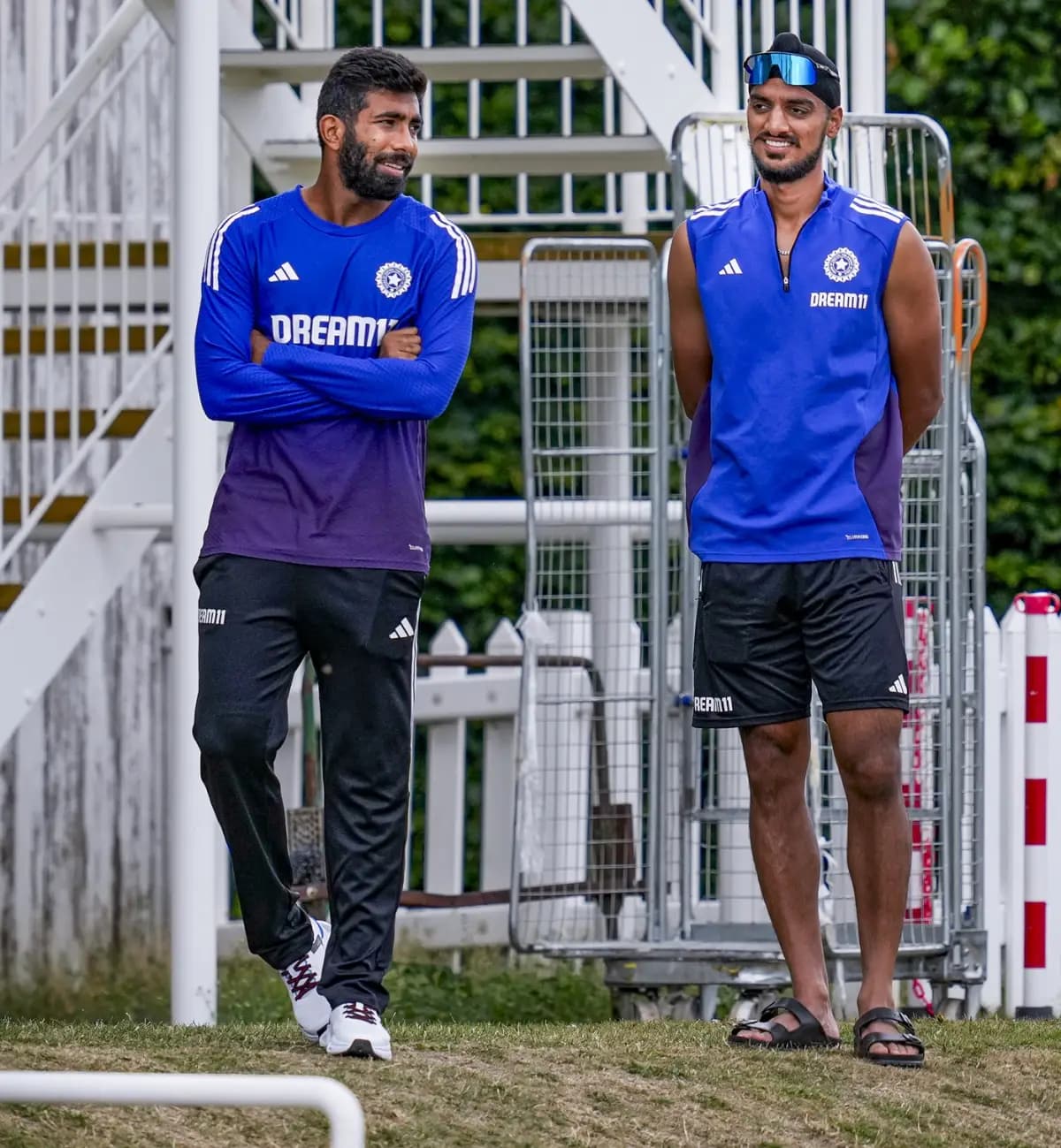
Team India has suffered a significant setback ahead of the crucial fourth Test against England at Manchester, as all-rounder Nitish Kumar Reddy and pacer Arshdeep Singh have been ruled out due to injuries. The developments come at a critical juncture in the ongoing five-match Test series, with England leading 2–1 and India aiming to level the series at Old Trafford.
Nitish Reddy, who had been added to the Indian squad for the England tour following impressive performances in domestic cricket and the IPL, sustained a left knee ligament injury during a gym training session. The injury has ruled him out for the rest of the series. According to the Board of Control for Cricket in India (BCCI), Reddy will return home immediately and begin his rehabilitation under the medical supervision of the National Cricket Academy in Bengaluru.
In a separate incident, Arshdeep Singh, a left-arm pacer who was being considered for a possible Test debut, suffered a thumb injury during a net session at the Beckenham training ground. While the extent of the injury is not career-threatening, it has been confirmed that he will miss the fourth Test, which starts on July 23, 2025.
In response to Arshdeep’s unavailability, the selectors have named Anshul Kamboj as a replacement. Kamboj, though relatively inexperienced at the international level, was part of the India A set-up and is viewed as a promising fast-bowling option.
These back-to-back injuries have put additional pressure on India’s already stretched bowling resources. Akash Deep, another pacer in the squad, is still recovering from a groin strain and remains doubtful for the next match. As a result, India may be forced to reconsider their rotational strategy for fast bowlers, particularly Jasprit Bumrah, who has only recently returned from back surgery and was being managed carefully to prevent overload.
The injuries also pose challenges for the team’s balance and combination. Nitish Reddy's ability to contribute with both bat and ball offered a unique flexibility, which now becomes harder to replicate. His exclusion leaves a void in the lower-middle order and affects India’s ability to rotate bowlers without compromising batting depth.
This double blow underscores the physical toll of a long Test series, especially in foreign conditions. As India gears up for the fourth Test, the focus will be on regrouping quickly, managing player fitness smartly, and executing tactical changes effectively to stay alive in the series. The upcoming match at Manchester promises to be a test of not just skill, but resilience, depth, and adaptability.