



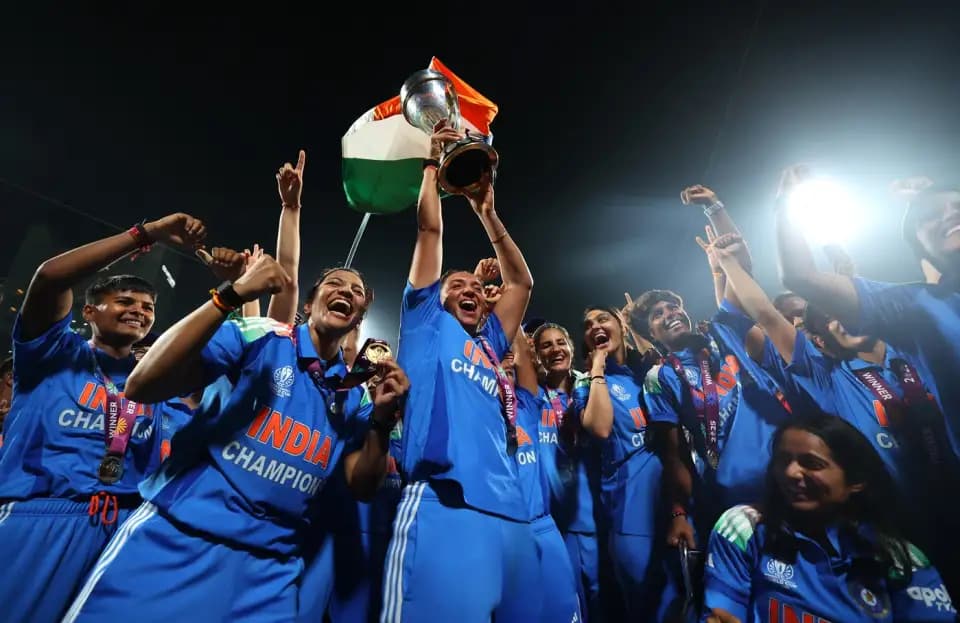
The women’s game is bracing for a defining half-decade as administrators move toward a ten-team Women’s World Cup in 2029 while parallel negotiations continue to place cricket on the program for the 2032 Olympic Games. Together, the two developments point to a future in which the sport’s biggest stage and the world’s biggest sporting event could finally align around women’s cricket at full scale.
The proposed expansion to ten teams is more than a numbers change; it’s a signal of intent. A larger field promises broader geographic reach, a deeper talent pool, and a tournament narrative that stretches beyond the traditional powerhouses. For emerging programs, a realistic path into a World Cup can accelerate investment at home—new domestic contracts, better facilities, and year-round calendar space. For established nations, it’s an invitation to plan more nuanced rotation policies and build bench strength without sacrificing winning standards.
How a ten-team event could work
Tournament architects are weighing two familiar blueprints. One is a pair of groups (five teams each) feeding into semifinals; the other is a compact league phase followed by knockouts. The group model creates must-watch matches from the outset and limits player workload; the round-robin model guarantees marquee cross-overs and a more definitive table. Qualification is expected to blend automatic berths for top-ranked sides with a global qualifier that spotlights Associates—crucial for ensuring that growth markets get meaningful, televised cricket rather than a once-in-a-cycle warm-up.
Why expansion matters now
Across the last decade, women’s cricket has vaulted from promising to commercially viable. Broadcast windows once considered “development slots” now draw prime-time audiences; stand-alone women’s bilateral series are attracting sponsors on their own terms; domestic leagues have created household names and visible career pathways. A ten-team World Cup leverages that momentum, giving broadcasters more inventory and fans a longer narrative arc—opening-day upsets, mid-tournament recalibrations, and pressure-cooker qualification scenarios.
Calendar chess and player welfare
Growth without care can bite back. Boards will need to choreograph the international calendar around domestic windows, travel loads, and recovery time. Expect sharper workload management—sports-science baselines for fast bowlers, clearer concussion protocols, and contingency depth for multi-format tours. A slightly longer World Cup will require smarter scheduling: clustered venues to reduce travel days, rest buffers before knockouts, and climate-aware start times.
The Olympic question—why 2032 makes sense
While cricket’s Olympic courtship has waxed and waned for over a century, the 2032 Games present a compelling alignment: a host nation steeped in cricket culture, a ready fan base, and stadiums that understand the sport’s rhythms. The format under discussion is short-form—made for television, compatible with multi-sport timetables, and instantly legible to new audiences. For women’s cricket in particular, Olympic inclusion would be transformational: national-team funding often rises materially for Olympic sports, athlete support systems expand, and grassroots programs benefit from the halo of school-level recognition.
What Olympic inclusion would change
If cricket enters the 2032 roster, expect three immediate ripple effects. First, talent identification will start earlier, with federations investing in U17 and U19 women’s pathways geared to short-form pressures. Second, bilateral calendars in the Olympic year will compress around qualifier windows, with boards prioritizing fitness and combination-building over experimental series. Third, sponsors who speak the language of the Olympics—heritage brands, national champions, and public-sector partners—will come to the table with longer contracts and broader activation plans.
Opportunities for Associates and new markets
The combination of a larger World Cup and a potential Olympic berth could be jet fuel for emerging teams. Central contracts for a dozen players become easier to justify when a federation can point to two global shopfronts in a three-year span. Facilities receive multi-use upgrades; university and school competitions gain prestige; and diaspora communities—often the first movers in new markets—find official pathways that keep talent inside the system rather than losing it to other sports.
Guardrails against pitfalls
Expansion can dilute competitiveness if it’s not backed by fixtures. The antidote is guaranteed game time: tiered tri-series, regional championships with promotion-relegation, and performance-weighted travel grants that help smaller boards host higher-ranked opponents. Integrity measures must keep pace—anti-corruption education for players entering the top tier for the first time, robust data security around selection and tactics, and standardized concussion and heat protocols across venues.
The fan experience
For supporters, a ten-team World Cup offers variety—contrasting styles, new rivalries, and different conditions—all wrapped in scheduling that’s friendly to multiple time zones. If Olympic talks bear fruit, the sport gains something else: the storytelling power of the five rings. Medal narratives are simple, global, and sticky; they invite casual viewers to lean in and, often, to stay.
The road ahead
Over the next seasons, watch for three milestones: (1) a formal confirmation of the 2029 format and qualification map; (2) a synchronized international calendar that protects player health while expanding the women’s footprint; and (3) a definitive decision on cricket’s Olympic status, followed by a transparent qualification pathway. Each step will shape budgets, travel, and training from national teams all the way down to academy programs.
If the governing bodies land this correctly, 2029 through 2032 could become women’s cricket’s most consequential window to date—one that moves the sport from “rapidly growing” to “securely global,” with a World Cup that welcomes more teams and, potentially, an Olympic stage that welcomes the world.