




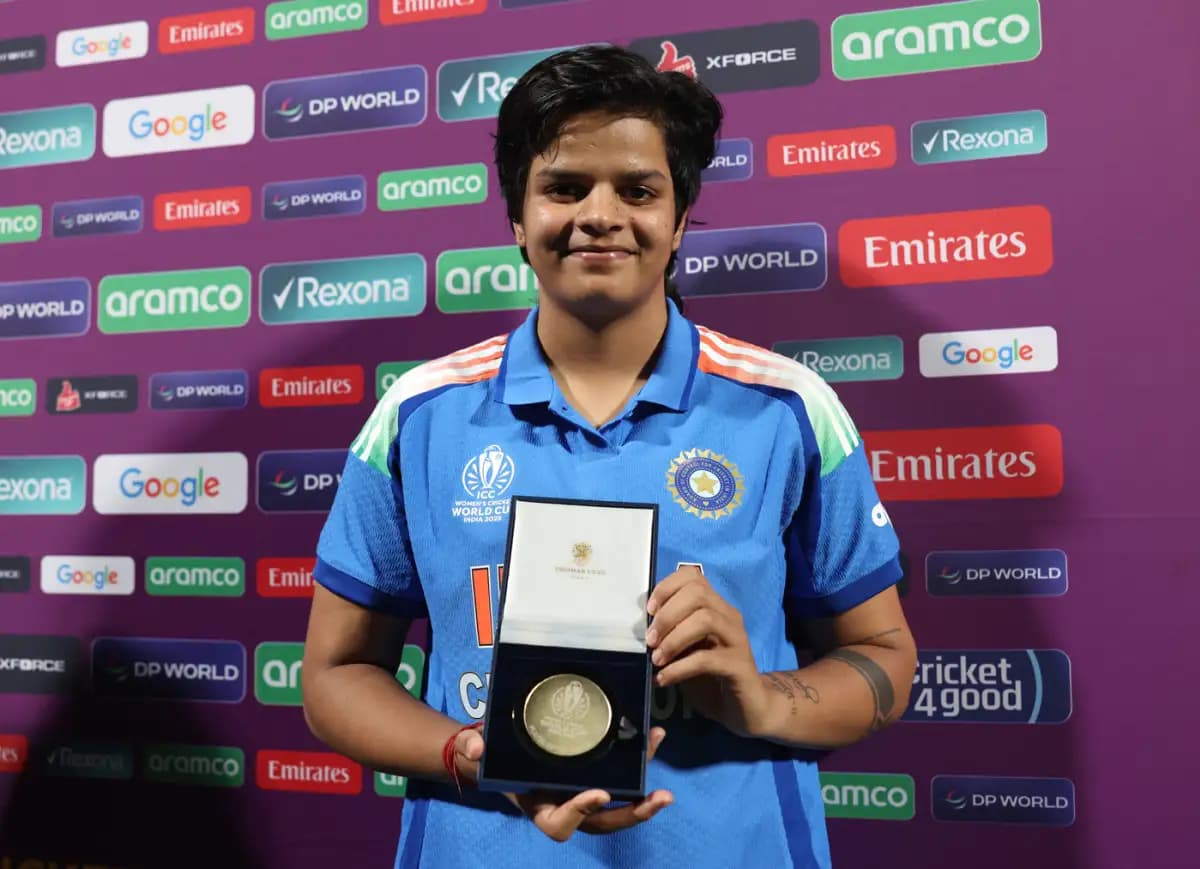
India captain Harmanpreet Kaur revealed that a strong gut feeling led her to hand the ball to Shafali Verma during the tense closing stages of the Women’s World Cup final, a decision that turned out to be match-defining. Shafali, primarily known for her explosive batting, produced a stunning bowling spell that broke a crucial partnership and tilted the contest decisively in India’s favor, helping the team script a famous victory.
Speaking after the match, Harmanpreet smiled as she recalled the instinctive call. “I just looked at Shafali and knew it was her day,” she said. “She had been buzzing with energy all game — her body language, her confidence — everything told me she was ready for a big moment. So I told her, ‘You’re getting the next over.’ And the way she delivered, it was incredible.”
The decision came at a critical juncture when the opposition seemed to be clawing their way back into the match. With the regular bowlers struggling to find breakthroughs, Harmanpreet’s bold move to turn to Shafali — who had bowled only sparingly throughout the tournament — was seen as a gamble. But within minutes, it paid off spectacularly. Shafali dismissed the well-set batter with her very first delivery, trapping her plumb in front, and followed it up with another wicket in the same over to ignite India’s charge toward victory.
Shafali’s double strike sent the packed crowd into raptures and lifted the Indian players’ spirits. Her spell not only broke the rhythm of the chase but also showcased her growing maturity and adaptability — hallmarks of a player evolving far beyond her reputation as just a hard-hitting opener.
Reflecting on her captain’s faith, Shafali said later, “When Didi (Harmanpreet) handed me the ball, I was nervous but also excited. She just told me, ‘Back yourself — this is your moment.’ That gave me so much confidence. I just wanted to keep things simple, bowl to my strengths, and it worked perfectly.”
Harmanpreet, meanwhile, praised the youngster’s composure and competitive spirit. “It’s not just about skill — it’s about attitude,” she said. “Shafali always wants to contribute, whether with bat, ball, or in the field. She thrives on responsibility, and that’s what makes her special. As a captain, when you see that fire, you just follow your instinct.”
The moment encapsulated India’s fearless approach under Harmanpreet’s leadership — a blend of tactical sharpness, trust in youth, and emotional intelligence. It also highlighted the growing versatility within the team, with players ready to step into any role when the situation demands.
India’s eventual win, sealed amid a wave of jubilation, owed much to that single inspired decision — and to a young player’s fearless execution of her captain’s vision. “Sometimes,” Harmanpreet said, smiling after lifting the trophy, “you just feel it in your heart that it’s someone’s day. Today was Shafali’s — and she made it unforgettable.”
For India, it was not just a triumph of skill, but of instinct, trust, and belief — qualities that have come to define this golden era of women’s cricket.